Starlit Solitude: Crossing the Atacama's Silence
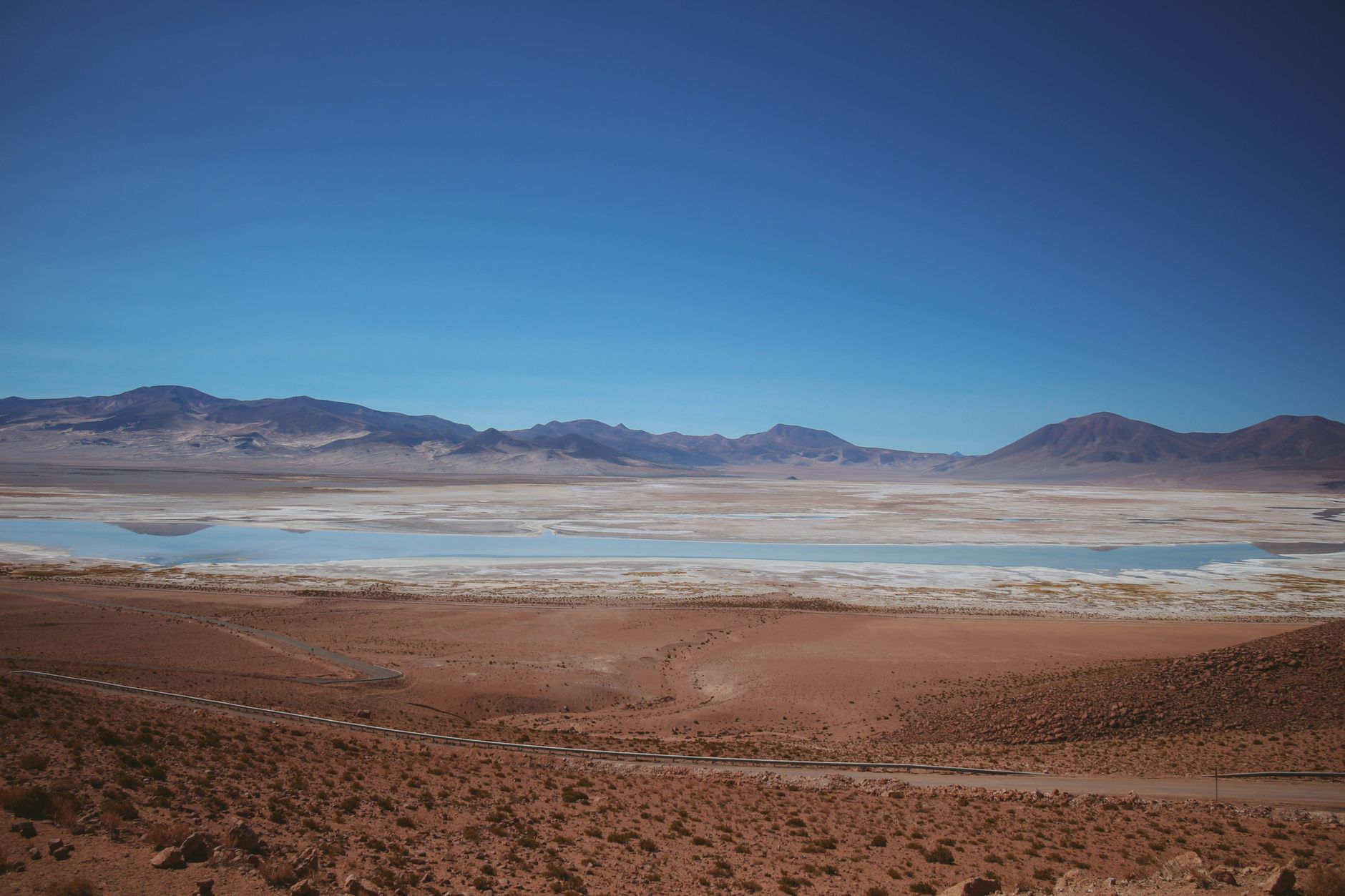
The Atacama Desert is not an absence of life; it is a distillation of matter down to its elemental bones. Spanning over 100,000 square kilometers in northern Chile, this high-altitude plateau stands as the driest non-polar region on Earth, an arid kingdom where rain is a generational myth.
1. Mineral Vastness & Salt Flats
Traversing the Salar de Atacama at midday is an experience of blinding white crystalline geometry. Salt polygons stretch toward volcanic cones dusted with pink sulfur and snow. Here, shallow turquoise lagoons sustain silent flocks of Andean flamingos, their plumage vibrant against the sun-baked crust.
"In the Atacama, your shadow is sharp as a blade. But as twilight arrives, the desert becomes soft, washing through ochre, violet, and deep indigo."
2. The Celestial Dome
Because humidity approaches zero percent and ambient city lights are hundreds of miles removed, nightfall transforms the sky into an astronomical amphitheater. The Magellanic Clouds, the dark dust lanes of the Milky Way, and distant nebulae become visible to the naked eye with startling three-dimensional clarity.
3. Adobe Sanctuaries & Thermal Springs
Local architecture relies on rammed earth, volcanic stone, and woven straw roofs—materials that insulate naturally against desert day heat and freezing night temperatures. Natural thermal pools, fed by deep Andean geothermal vents, offer soothing immersion under starlit obsidian skies.
4. Expedition Advice
- Acclimatization: Spend 48 hours in San Pedro de Atacama (2,400m) before ascending to geyser basins at 4,200m.
- Hydration: Drink between three and four liters of water daily; carry restorative electrolytes.
- Optics: Bring high-power binoculars for nocturnal astronomical viewing.
Plan an Astronomical Journey
Our concierge manages private permits, astronomical guides, and sustainable lodge access across Chile.